Source Biodegradable Paper Popsicle Bag for Food, Gift, and Medical Uses
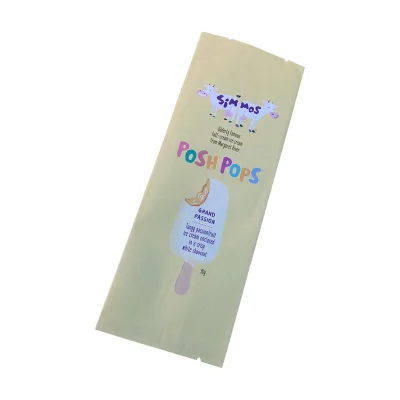
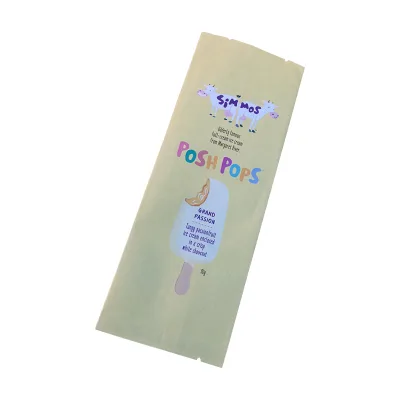
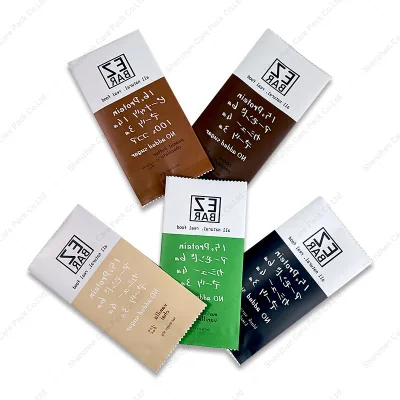
Explore 30 listings for the biodegradable paper popsicle bag suitable for food, gift, and medical packaging. Buyers can compare materials like kraft paper with PLA, sealing methods, and customization options from suppliers in China.
Key considerations
Products List






Comprehensive Sourcing Guide
Strategic Sourcing Guide for Biodegradable Paper Popsicle Bags
Understanding Material Composition and Environmental Claims
When sourcing biodegradable paper popsicle bags, the primary distinction lies in the raw material composition and the specific environmental claims attached to the product. The market offers a diverse range of materials, from traditional paper blends to advanced compostable laminates. Based on observed product attributes, buyers should expect to encounter materials such as Kraft paper combined with PLA (Polylactic Acid) and PBAT (Polybutylene Adipate Terephthalate). These specific polymers are frequently cited in the context of compostable and biodegradable packaging solutions. The presence of PLA and PBAT suggests a material profile designed to break down under specific industrial composting conditions, distinguishing it from standard paper or pure plastic bags.
However, procurement teams must remain vigilant regarding the term "biodegradable" versus "compostable." While some listings explicitly state "Compostable, Biodegradable" as material properties, others may list generic "Plastic" or "Laminated Material" without further qualification. The supply chain data indicates a mix of raw materials including Mopp, PE, Vmpe, and various custom blends. For a popsicle bag, which often requires moisture resistance to handle melting ice cream or condensation, a simple paper bag is often insufficient. Consequently, many suppliers utilize laminated materials or specific plastic layers (such as PE, CPP, BOPP, or PA) to achieve necessary barrier properties.
Buyers must verify the exact ratio of paper to biodegradable polymer in the final product. A bag labeled as "Kraft paper" might be a paper-only construction, while another labeled with "Kraft paper+PLA+PBAT" offers a different degradation profile. The observed material list includes "Eco-Friendly, Moisture Proof, Recyclable" as raw material attributes, indicating that moisture resistance is a critical functional requirement for this application. When evaluating suppliers, request a detailed Bill of Materials (BOM) to confirm whether the biodegradable claim applies to the entire bag or only specific components like the zipper or handle.
Technical Specifications and Functional Performance
The functional performance of a popsicle bag is dictated by its physical specifications, particularly thickness, sealing methods, and barrier properties. Observed data points to a highly customizable thickness range, with many suppliers offering "Customized" thickness options to meet specific load-bearing and barrier requirements. For popsicle applications, the bag must withstand the weight of the product and the potential for liquid leakage. The sealing method is a critical technical specification; while some products utilize heat-sealing, others feature a "Zipper Top" for reusability and convenience.
The printing and surface handling processes also play a significant role in the final product's utility. Gravure printing and digital printing are both observed in the market, allowing for high-quality branding and nutritional information. The surface handling often includes "Matt Lamination," which not only enhances the aesthetic appeal but also provides an additional layer of protection against moisture and grease. The standard size observed in the data is 70cm30cm50cm, though this likely refers to the carton packing dimensions rather than the individual bag size. Individual bag sizes are noted as "custom," meaning buyers must define the exact dimensions required for their specific popsicle stick or product shape.
Barrier performance is another key technical consideration. The data explicitly lists "Waterproof" as a performance attribute, which is essential for ice cream products. However, the raw materials also include "Moisture Proof" and "Recyclable" options. Buyers should verify the specific water vapor transmission rate (WVTR) and oxygen transmission rate (OTR) if the product has a long shelf life. The variety of bag materials listed, including Pet, VMPET, OPP, PE, CPP, BOPP, PP, PA, and Nylon, suggests that different barrier levels are available depending on the specific application needs. For instance, a bag intended for frozen storage may require different barrier properties than one for immediate consumption.
Compliance, Certification, and Regulatory Verification
Navigating the regulatory landscape for biodegradable packaging requires careful verification of certifications and standards. The supply data indicates that suppliers may hold certifications such as BRC, SGS, ISO, and COA. These are standard industry certifications that verify the quality management systems and product safety of the manufacturer. However, for biodegradable claims, specific environmental certifications are crucial. While the provided data mentions general certifications, it also lists background standards such as EN 13432, GOTS, OEKO-TEX, and FSC.
Buyers must understand that the presence of a general ISO or BRC certification does not automatically validate the biodegradability of the product. EN 13432 is a European standard for packaging recoverable through composting and biodegradation, and it is a common benchmark for compostable plastics. GOTS (Global Organic Textile Standard) and OEKO-TEX are typically associated with textiles, so their relevance to paper bags depends on the specific fiber content and dyeing processes. FSC (Forest Stewardship Council) certification is relevant if the paper component is sourced from responsibly managed forests.
When evaluating a supplier, do not assume that a product is compliant with EN 13432 or other composting standards unless explicitly stated in the product documentation. The observed data lists "Biodegradable" and "Compostable" as material attributes, but the specific standard against which these claims are tested is not always provided in the initial listing. Buyers should request third-party test reports that confirm the product meets the specific standards required by their target market. For example, if selling in the European Union, compliance with EN 13432 is often mandatory. In the United States, ASTM D6400 or D6868 may be the relevant standards.
Cost Drivers and Economic Considerations
The cost of biodegradable paper popsicle bags is influenced by several dynamic factors, including raw material prices, order volume, and customization requirements. The observed Minimum Order Quantity (MOQ) ranges widely, from as low as 200-500 pieces to as high as 20,000 pieces, with some listings suggesting an MOQ of 10,000 or 5,000 pieces. This variation indicates that smaller orders may incur a higher unit cost due to setup fees and production inefficiencies, while larger orders benefit from economies of scale.
The material composition is a primary cost driver. Bags made from pure Kraft paper are generally less expensive than those incorporating PLA and PBAT blends or complex multi-layer laminates. The use of specialized materials like VMPET or PA for enhanced barrier properties will also increase the unit price. Additionally, the printing process affects costs; gravure printing is typically more cost-effective for high-volume runs, whereas digital printing may be preferred for short runs or highly customized designs, albeit at a higher per-unit cost.
Packaging and shipping logistics also contribute to the total cost. The data shows that products are often packed in cartons, with specific dimensions like 20x15x1 cm for single packages. The shipping terms, such as DDP (Delivered Duty Paid), CIF (Cost, Insurance, and Freight), or FOB (Free on Board), will significantly impact the final landed cost. Buyers should also consider the lead time, which is observed to be around 15-20 days. Rush orders or customizations that require additional tooling or material sourcing may extend this timeline and increase costs.
Typical Applications and Market Fit
Biodegradable paper popsicle bags are designed for a variety of industrial uses, with food packaging being the most prominent application. The observed data lists "Food Packaging" as a primary application, specifically mentioning "Food," "Coffee," "Tea," "Snack," "Nut," "Whey Protein," and "Clothes." This versatility suggests that these bags are suitable for a wide range of consumer goods, not just ice cream. The "Zipper Top" feature is particularly valuable for products that require resealability, such as snacks or dry goods.
The specific application of popsicle bags requires a balance of aesthetics and functionality. The "Matt Lamination" and "Custom" color options allow for brand differentiation, which is crucial in the competitive food and beverage market. The "Disposable" and "Recyclable" features align with the growing consumer demand for sustainable packaging solutions. While the primary use case is food, the data also indicates applications in "Medical Packaging," "Gift Packaging," and "Cosmetic Packaging," suggesting that the material properties can be adapted for non-food items as well.
For popsicle manufacturers, the bag must not only protect the product but also enhance the unboxing experience. The "Kraft Paper" base offers a natural, eco-friendly look that appeals to environmentally conscious consumers. The ability to customize the size and shape allows for unique branding opportunities. However, buyers must ensure that the bag's barrier properties are sufficient for the specific product. For example, a bag for a wet popsicle may require a different moisture barrier than one for a dry snack.
Supplier Evaluation and Quality Control Protocols
Evaluating a supplier for biodegradable paper popsicle bags requires a multi-faceted approach that goes beyond price comparison. The location of the supplier is a key factor, with observations pointing to origins in Wenzhou and Hebei, China. These regions are known for their packaging manufacturing capabilities, but buyers should verify the specific factory's capacity and history. The "Brand Name" Banze is observed in the data, but buyers should not rely on a single brand; instead, they should evaluate the supplier's overall track record.
Quality control is paramount, especially for food-contact packaging. Buyers should request samples to test for physical properties such as tensile strength, seal integrity, and moisture resistance. The "Sample" attribute indicates that free samples are often available, though freight charges may apply. This is an opportunity to verify the "Waterproof" and "Biodegradable" claims firsthand. Additionally, buyers should review the supplier's quality management systems, looking for certifications like ISO and BRC.
The production process is another area of focus. The data mentions "Plastic Packaging Bags" as a making process, but for biodegradable bags, the process must ensure that the biodegradable components are not compromised. Buyers should ask about the supplier's waste management practices and their ability to handle custom orders. The "Custom Order" attribute suggests flexibility, but buyers must confirm the supplier's ability to maintain quality during customization.
Long-Term Procurement and Supply Chain Resilience
Long-term procurement of biodegradable paper popsicle bags requires a strategic approach to supply chain management. The variability in MOQs, ranging from 200 to 200,000 pieces, offers flexibility but also introduces complexity in inventory management. Buyers should develop a relationship with suppliers that can scale production up or down based on market demand. The "Customization" attribute is a double-edged sword; while it allows for product differentiation, it can also lead to supply chain disruptions if the supplier lacks the capacity to handle frequent design changes.
Payment terms, such as "T/T, 30% Deposit, Balance Before Shipping," are standard but should be negotiated based on the order volume and relationship history. Buyers should also consider the lead time, which is typically 15-20 days. In times of global supply chain volatility, having multiple suppliers or a buffer stock can mitigate the risk of delays. The "Shipment" attribute indicates a standard delivery window, but buyers should confirm the reliability of the logistics partners used by the supplier.
Finally, buyers must stay informed about evolving regulations and consumer expectations regarding biodegradable packaging. The market is shifting towards more stringent standards for compostability and recyclability. Suppliers who proactively adapt to these changes and maintain up-to-date certifications will be better positioned to support long-term procurement needs. By focusing on transparency, quality, and flexibility, buyers can build a resilient supply chain for biodegradable paper popsicle bags that meets both current and future demands.
FAQs
What materials are used for biodegradable paper popsicle bags?
These bags typically use Kraft paper combined with PLA and PBAT polymers. Some options also include laminated materials like PE or CPP to ensure moisture resistance and durability for food applications.
Can I customize the size and thickness of these bags?
Yes, both size and thickness are fully customizable to meet specific product needs. Suppliers offer tailored dimensions and wall thicknesses to ensure the bag fits the popsicle shape and provides adequate barrier protection.
What certifications do these biodegradable bags usually hold?
Common certifications include BRC, SGS, ISO, and COA to verify quality and safety standards. While specific composting standards like EN 13432 are relevant, buyers must request test reports to confirm compliance for their target market.
How long does it take to receive an order?
The standard shipment lead time is typically 15 to 20 days after order confirmation. This duration may vary depending on the customization level, order volume, and the specific shipping terms agreed upon with the supplier.
What is the minimum order quantity for these bags?
Minimum order quantities vary significantly, ranging from 200 pieces to 20,000 pieces depending on the supplier. Some vendors require a minimum of 5,000 or 10,000 pieces, while others may accept smaller trial orders.
Are these bags suitable for food packaging applications?
Yes, they are explicitly designed for food packaging including snacks, coffee, tea, and nuts. The materials are often moisture-proof and comply with food safety standards to ensure product integrity during storage and transport.
What printing methods are available for these bags?
Suppliers offer both Gravure Printing and Digital Printing to accommodate different volume needs. These methods allow for up to 10 colors and can include surface treatments like Matt Lamination for enhanced aesthetics and protection.